
DFW Hail Season Is Here: What Every Homeowner Needs to Know About Roof Damage and Insurance Claims in 2026
If you live in the Dallas-Fort Worth area, you already know what late spring sounds like — tornado sirens, hail pinging off the windows, and that uneasy quiet after a storm rolls through. May is statistically the most active month for severe hail in Texas, and 2026 is no exception. North Texas has already logged multiple hail events this season, including quarter-sized hail in late April, and the National Weather Service is tracking additional severe storm threats through Memorial Day weekend.
The real question most homeowners are asking right now isn’t whether their roof took a hit. It’s what happens next — and whether their insurance will actually cover it.
Hail Damage Isn’t Always Obvious
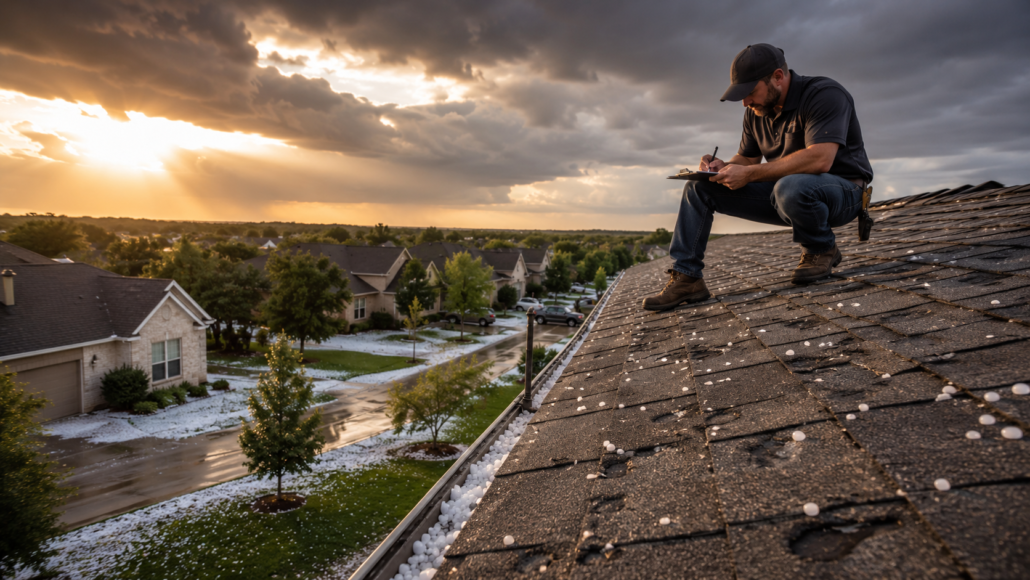
One of the biggest mistakes DFW homeowners make after a storm is assuming their roof is fine because they don’t see missing shingles from the ground. Hail damage to asphalt shingles often shows up as small dents, bruised granules, or cracked mat — damage that’s invisible from your driveway but shortens the life of your roof by years.
Left unaddressed, hail damage leads to slow leaks, wood rot in the decking, and eventually interior water damage that costs far more to fix than the roof itself. That’s why a professional roof inspection after any significant hail event is critical — even if everything looks normal at first glance.
At A Grade Roofing, we provide free storm damage inspections across the entire DFW metroplex. Our inspectors document every point of impact with photos and measurements, giving you a clear picture of your roof’s condition and the evidence you need if you decide to file a claim.
The Insurance Landscape Has Changed in 2026
If you haven’t filed a roof claim in a few years, the process may look very different from what you remember. Texas insurers have been tightening their policies in response to rising material costs and increasingly frequent severe weather. Here’s what’s changed:
Actual Cash Value vs. Replacement Cost. Many insurers have quietly shifted from Replacement Cost Value (RCV) policies to Actual Cash Value (ACV) policies on roofs over a certain age. Under ACV, your payout is reduced by depreciation — meaning a 12-year-old roof might only be covered at a fraction of the replacement cost. Before you file a claim, check your declarations page or call your agent to understand which type of coverage you have.
Higher wind and hail deductibles. Standard deductibles for wind and hail damage have been climbing across the board. In DFW, it’s increasingly common to see 2% deductibles on these claims rather than the flat-dollar amounts homeowners are used to. On a $400,000 home, that’s an $8,000 out-of-pocket cost before insurance pays a dime.
Age-based restrictions. Some carriers now require a roof inspection before renewing your policy if your roof is over 10-15 years old. If it doesn’t pass, they may decline to renew, impose exclusions, or require a replacement before continuing coverage. Knowing your roof’s condition before your renewal date gives you leverage.
Premium increases after claims. Homeowners across Texas are seeing premium hikes of 20-50% at renewal — sometimes even without filing a claim. If you do file, expect your rates to go up. That doesn’t mean you shouldn’t file a legitimate claim, but it does mean you should understand the full financial picture before deciding.
How to Protect Yourself This Storm Season
The best thing you can do right now is get ahead of the damage — and the paperwork.
Get a professional inspection. Don’t wait until you see a leak. A qualified roofing contractor can identify hail damage early, document it properly, and help you understand whether a claim makes sense. A Grade Roofing offers free inspections with detailed photo documentation — no obligation, no pressure.
Know your policy. Pull out your homeowner’s insurance declarations page and review your roof coverage, deductible type, and any age-based exclusions. If anything is unclear, call your agent now — not after a storm hits.
Document everything. If a storm comes through your area, take photos of your property immediately afterward. Note the date, time, and visible damage to your roof, gutters, siding, windows, and fence. This documentation strengthens your claim and helps your adjuster process it faster.
Work with a contractor who handles insurance claims. The claims process involves inspections, adjuster meetings, supplemental filings, and negotiation. A roofing company that specializes in insurance restoration — like A Grade Roofing — can coordinate directly with your adjuster, handle documentation, and make sure nothing falls through the cracks.
Don’t Wait Until the Next Storm
DFW averages six to eight significant hail events per year, and we’re right in the middle of peak season. If your roof has been through one or more storms without an inspection, now is the time to find out where you stand.
A Grade Roofing has been helping Dallas-Fort Worth homeowners navigate storm damage and insurance claims with straightforward service and honest assessments. We don’t upsell. We inspect, document, and give you the information you need to make the right call for your home.
Schedule your free roof inspection today. Call A Grade Roofing or visit agradetexas.com to book online.
A Grade Roofing is a licensed residential and commercial roofing contractor serving the Dallas-Fort Worth metroplex. We specialize in roof replacement, new construction roofing, storm damage repair, and insurance claim coordination.

