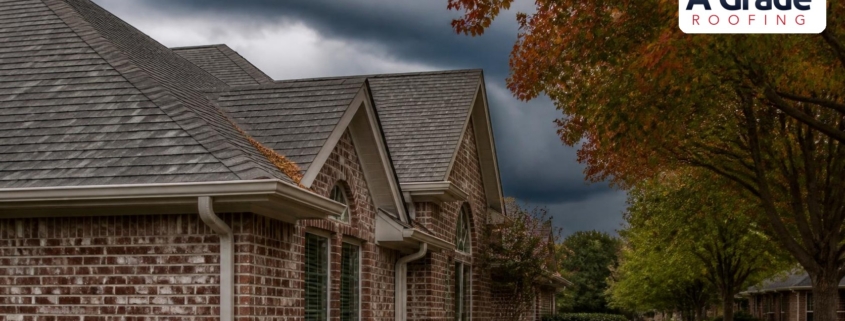
Fall Roof Checklist for DFW Homeowners: What to Handle Before the First Cold Front
North Texas doesn’t ease into fall. It arrives as a front. One afternoon it’s 95 and still, the next morning it’s 55 with a 40 mph north wind and sideways rain. That swing is hard on a roof that spent four months baking, and the first cold rain of the season is when a lot of small summer problems show up as ceiling stains.
The good news is that most of what goes wrong in October was fixable in September. Here is the short list.
1. Sweep for summer storm damage you never noticed
DFW takes hail and straight-line wind from spring through early fall, and a lot of it lands on roofs nobody looks at afterward. Bruised shingles, cracked mats, and granule loss on the slope that faced the storm are easy to miss from the driveway, and a roof can look fine from the street while the felt underneath is already exposed.
Walk the yard and look for the tells: granules piling up at downspout outlets, dented gutters or vent caps, shingle tabs lifted at the edges, debris on the roof that wasn’t there in May. If you find any of it, get a professional roofer to look before the rains start. Storm damage is often an insurance matter rather than an out-of-pocket one, and most policies put a time limit on reporting it. Check yours.
A Grade does a free roof review that covers this. Call 214-663-1116 and we’ll put eyes on it.
2. Clear the gutters before the leaves and the rain show up together
Red oaks, pecans, elms, and sweetgums drop most of their leaves in DFW between October and December, right when the rain returns. A gutter full of leaves stops draining, water backs up under the first course of shingles, and the fascia board behind the gutter starts to rot. By spring the gutter is pulling away from the house and the drip edge is rusted.
Clean the gutters now while they’re dry and light, then check every downspout with a hose. Water should run out the bottom fast and discharge several feet from the foundation. On North Texas clay soil, a downspout dumping next to the slab is a foundation problem waiting to happen, not just a roofing one.
3. Check flashing, pipe boots, and sealant
This is where most real leaks come from on an otherwise sound roof. The rubber collar on a plumbing vent boot cracks after a few summers of UV. Sealant at the chimney counter-flashing, satellite mount, and skylight curb dries out and pulls loose. Step flashing along a dormer wall lifts a hair. None of it leaks in August because there’s no rain. All of it leaks in the first cold front.
From the ground you can spot obvious problems with binoculars, but this is the item on the list that pays to have a roofer check up close. It’s also the cheapest category of roof repair there is, which makes it the most frustrating one to discover from inside the house.
4. Go up in the attic on a bright afternoon
Ten minutes in the attic tells you a lot. Turn the light off and look for daylight at the roof deck. Look for dark streaks or fresh water stains on the underside of the decking, especially around penetrations and at the valleys. Feel the insulation near the eaves. If it’s damp or matted, water is getting in somewhere.
While you’re there, check that the soffit vents aren’t buried under insulation and that the ridge or roof vents are open. Attic ventilation matters more in DFW than almost anywhere. A roof that can’t breathe cooks its own shingles from underneath, and trapped moisture in winter does the same job with mold. We check ventilation on every replacement for exactly that reason.
5. Trim the limbs and think about wind
Cold fronts bring gusts, and gusts turn overhanging limbs into sanders. A branch resting on the roof scrapes granules off the same spot every time the wind moves, and the bare mat underneath fails years early. Trim anything within six feet of the roof surface, and take a hard look at dead limbs that could come down on the roof in a storm.
6. Know your roof’s age and what your policy says about it
Texas insurance carriers have gotten strict about roofs. Many policies now pay actual cash value instead of full replacement on roofs past a certain age, and some carriers won’t renew on an older roof at all. If you don’t know how old your roof is, your closing documents, a prior claim, or a roofer’s inspection can usually pin it down.
It’s worth reading the roof section of your policy before renewal season rather than after a claim. If the roof is getting up there in years, a documented inspection now gives you a clear picture before your carrier forms its own.
What to skip
Don’t walk your own roof. Fall mornings leave shingles slick with dew, and the risk isn’t worth what you’ll see from up there. Don’t pressure-wash shingles to clean off algae streaks; it strips granules and voids most warranties. And if someone knocks on your door after the next storm offering a free inspection with a truck from out of state, take their card and call a local roofer instead.
One call covers the list
A Grade Roofing has handled residential and light-commercial roofs across Dallas-Fort Worth for years, and a fall roof review is one of the most useful things we do. We’ll check the storm damage, flashing, ventilation, and gutters, give you a straight answer on what needs attention and what doesn’t, and help with the insurance side if there’s a claim in it.
Call 214-663-1116 or request a free roof review at agradetexas.com. Get it done before the front gets here.