
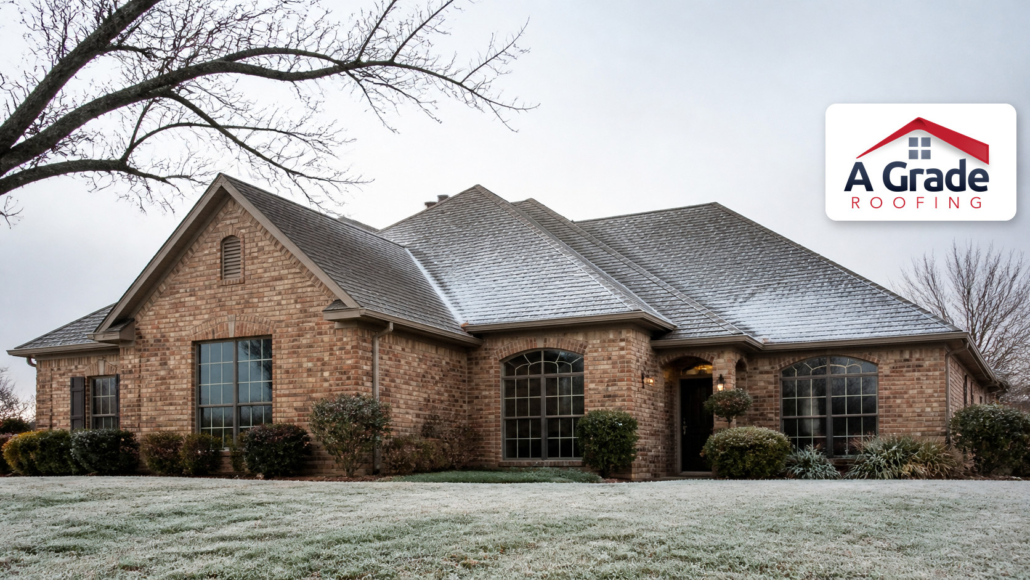
Wind, Ice, and Attic Moisture: Getting Your DFW Roof Ready for Winter Weather
North Texas winters do not look like winters in the northern states, and that is exactly why roofs here get caught off guard. A few mild months can end with a hard freeze, a sheet of ice on every limb, and a cold front that pushes gusts across the metroplex for a full afternoon. Roofs built for heat and hail then take a kind of stress they rarely see, and the damage often shows up as a ceiling stain weeks later rather than a visible problem on the day.
Here is what winter weather does to a DFW roof, what to look at before it arrives, and what to do afterward.
Wind finds the weak edges first
Shingles hold on through a sealant strip that bonds each course to the one below it. On an older roof that sealant dries out and loses grip, and a strong north wind can lift the edge of a shingle, crease it, or pull it free. The first places to fail are the edges and corners: the rake edges along the gable ends, the ridge cap, and the first course along the eave.
From the ground, look for shingles that sit higher than their neighbors, a visible crease line across a tab, or bare mat showing where a shingle used to be. Scattered pieces of shingle in the yard after a windy day are a clear sign to have the roof looked at, even if nothing is leaking yet.
Ice is a weight and a leverage problem, not an ice dam problem
Ice dams, the thick ridges of ice that form at the eaves in snow country, are rare in DFW. What North Texas gets instead is glaze ice, and the damage comes from weight and from what it does to the trees around the house. A limb coated in ice carries far more load than a dry one, and limbs that hang over a roofline are the ones that come down. A falling limb can crack shingles, puncture decking, or tear a gutter off the fascia in a single hit.
Before winter, look at the trees nearest the house. Dead or cracked limbs over the roof are worth trimming while the weather is calm, and a tree service can tell you which ones are a risk.
Freeze and thaw works on the small openings
Water that gets into a small gap and freezes expands. A cracked pipe boot, a lifted piece of flashing at a chimney or wall, or a nail head that backed out of a shingle can all take in a little rain, freeze overnight, and open a little wider by morning. Over a few cold snaps, a pinhole becomes a leak path.
The places worth checking are the same ones that fail in a summer storm: the rubber collars around plumbing vents, the metal flashing where the roof meets a wall or chimney, and the sealant around any skylight. Cracked rubber on a pipe boot is one of the most common findings on a pre-winter roof review, and it is among the simplest things to fix before it matters.
Your attic is part of the roof system
This is the piece most homeowners never consider. In winter, warm indoor air rises into the attic. If the attic is not ventilated well, or the insulation has gaps, that warm air meets the cold underside of the roof deck and condenses. The moisture shows up as damp insulation, dark staining on the decking, or a musty smell in the attic, and it can look exactly like a roof leak even though the shingles are fine.
Look at the attic on a cold morning if you can safely do so. Check that the soffit vents are not blocked by insulation, that bathroom and kitchen exhaust fans vent outside and not into the attic, and that nothing in the insulation is wet or matted. A roof that stays dry on the outside but collects moisture underneath still ages faster than it should.
After an ice storm or a wind event
Walk the property before anyone climbs a ladder. Look for limbs on the roof, shingle pieces in the yard, dented or displaced gutters, and any new stain on a ceiling or an upper wall. Take clear photos of anything you find, with the date, because wind and falling-limb damage can be part of an insurance claim and good documentation makes that conversation simpler.
Do not climb onto an icy roof. If a limb is resting on the roof or a section looks open to the weather, a temporary tarp is a job for a professional roofer, not a homeowner with a ladder in freezing conditions.
A short pre-winter checklist
Trim dead or cracked limbs that overhang the roof.
Look for lifted, creased, or missing shingles, especially at edges and the ridge.
Check pipe boots and flashing for cracks or gaps.
Confirm soffit vents are clear and exhaust fans vent outside.
Look for damp or discolored insulation and decking in the attic.
Photograph the roof and the property now, so you have a baseline if you ever need to file a claim.
Where A Grade fits
A Grade Roofing inspects residential and light-commercial roofs across Dallas-Fort Worth, and a winter-readiness review covers the shingles, the flashing, the penetrations, and the signs of attic moisture in one visit. If a storm has already passed through your neighborhood, or it has simply been a few seasons since anyone looked at your roof, a review before the cold arrives is far easier than one after.
Call 214-663-1116 or request a free roof review at agradetexas.com.


