
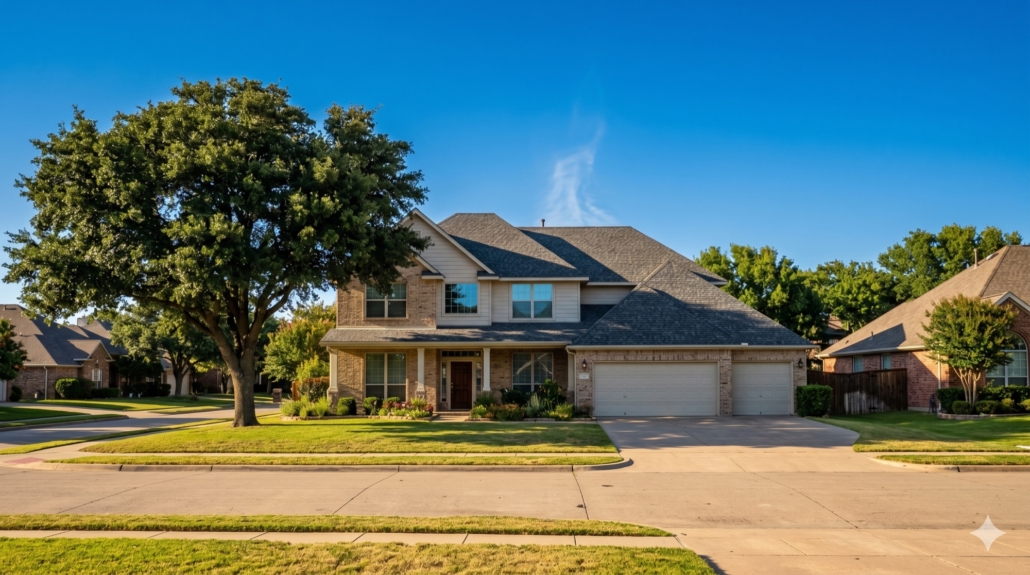
Why Summer Is the Hardest Season on Your DFW Roof (and 5 Signs Yours Is Struggling)
Most homeowners worry about their roof in the winter — ice, the occasional North Texas cold snap, a stray limb in a windstorm. But here in Dallas–Fort Worth, the season that quietly does the most damage is the one we’re standing in right now: summer.
A DFW roof in July routinely runs 150°F or hotter at the shingle surface. Stack that heat against 100°F-plus air temperatures, brutal UV exposure, and the sudden pop-up storms that roll through on a summer evening, and your roof is taking a beating from morning to night. The damage rarely shows up overnight. It builds — and the homeowners who catch it early are the ones who avoid a five-figure surprise down the road.
What summer heat actually does to a roof
Asphalt shingles are petroleum-based. Under relentless heat and UV, the protective granules loosen and wash off, the asphalt dries and grows brittle, and the shingles can curl, crack, or blister. Heat doesn’t stay on the surface, either. A poorly ventilated attic can climb past 130°F, and that trapped heat cooks your shingles from underneath while it drives up your cooling bill. Add the expansion-and-contraction cycle of hot days and cooler nights, and seams and flashing slowly work themselves loose.
None of this is dramatic. That’s exactly why it gets missed.
5 signs your roof is feeling the heat
You can spot most of these from the ground or a window — no ladder required.
- Granules in the gutters or at the downspouts. If you see what looks like coarse black sand collecting where your gutters drain, your shingles are shedding their protective layer. That’s the roof aging in fast-forward.
- Curling, cupping, or buckling shingles. Edges that lift or corners that cup upward are a classic heat signature. Curled shingles let water and wind get underneath.
- Cracked or bald spots. Shingles that look faded, shiny, or patchy have lost their granules and their UV protection.
- An attic that feels like an oven. If your upstairs rooms never cool down and your attic is stifling, you likely have a ventilation problem — which shortens roof life and raises your energy bills.
- Interior ceiling stains. Faint brown rings on a ceiling or near a vent usually mean water has already found a way in. Don’t wait on this one.
Why a summer roof check is worth it
Two reasons. First, small problems are cheap to fix and expensive to ignore — a few lifted shingles or a worn pipe boot caught in June is a very different conversation than a leak discovered after a September storm. Second, this is the calm between seasons. Spring hail season is winding down and the fall storm stretch hasn’t arrived yet, which makes early summer the ideal window to get ahead of any damage rather than scramble after it.
If your roof took hail or wind this spring, there’s an added reason not to wait: many insurance carriers set a window for filing storm-damage claims, and that clock doesn’t stop just because the damage isn’t obvious from the driveway. A documented inspection now protects your options later.
What A Grade does differently
We’re a local DFW roofer — not a storm-chasing crew that shows up after a hailstorm and disappears by fall. When we inspect a roof, we actually get on it. We document what we find with photos, we walk you through it in plain language, and we tell you the truth about what your roof needs — even when the answer is “it’s holding up fine, see you next year.”
That honesty is the whole point. A roof is one of the biggest investments on your house. You deserve a straight answer about its condition, not a sales pitch.
Get ahead of the heat
If you’ve noticed any of the five signs above — or you just haven’t had eyes on your roof in a few years — early summer is the smart time for a professional inspection. A Grade Roofing serves homeowners across North Dallas, Plano, Allen, McKinney, Frisco, Richardson, and the surrounding communities.
Schedule a roof inspection: (214) 663-1116 · agradetexas.com


